Introduction
A kitchen renovation for your home in Bath can transform how you cook, entertain and use your home. It can also lock expensive problems into place for decades.
Many homeowners in Bath and the surrounding areas focus on cabinet finishes, worktop materials and appliance brands. Those decisions matter, but the biggest frustrations often come from design mistakes made before installation starts.
Poor layouts, weak storage planning and inadequate lighting can reduce the value of a substantial investment. Fixing those problems after installation often requires new cabinetry, electrical work or structural alterations.
The good news is that most kitchen design mistakes are avoidable with careful planning.
Key Takeaways Plan the kitchen around daily use, not appearance alone. Design storage based on what you own, not estimated requirements. Combine task, ambient and feature lighting. Protect worktop space and circulation routes. Prioritise function before selecting finishes and design features.
## 1. Ignoring Kitchen Workflow and Layout ### Why it causes problems
Kitchen designers often refer to the relationship between the sink, hob and fridge as the kitchen work triangle.
Modern kitchens do not always follow a strict triangle, especially in large open-plan spaces. The principle remains valuable. The most-used areas should work together without unnecessary movement.
A poor layout can create:
Long walking distances Congested walkways Appliance door conflicts Limited preparation space Reduced efficiency during cooking
A kitchen may look impressive in photographs while performing poorly every day.
What to do instead
Map out your typical routine before finalising the design.
Consider:
Where groceries enter the kitchen Where food preparation takes place How dishes move from dining area to dishwasher How multiple people use the space at the same time
An experienced kitchen installer can often identify practical issues that remain hidden on design software.
## 2. Underestimating Storage Requirements ### Why it causes problems
Storage shortages rank among the most common complaints after a kitchen renovation.
Homeowners often assume new cabinetry will provide enough capacity. Once cookware, small appliances, serving dishes and pantry items move back into the room, available space disappears quickly.
The problem becomes worse in premium kitchens where large decorative features reduce usable storage.
Examples include:
Oversized islands with limited internal cabinets Excessive open shelving Appliance garages that consume cupboard space Decorative end panels that reduce cabinet width What to do instead
Conduct a storage audit before finalising the design.
Count:
Small appliances Pots and pans Baking equipment Food storage containers Pantry items Glassware Serving dishes
Design storage around those requirements.
Useful additions include:
Deep pan drawers Pull-out larder units Internal drawer systems Corner storage solutions Integrated recycling storage
Storage should support daily habits rather than showroom aesthetics.
## 3. Relying on a Single Light Source ### Why it causes problems
Many kitchens still depend on a row of ceiling downlights for illumination.
That approach creates shadows across preparation areas and leaves parts of the room underlit.
Lighting affects:
Food preparation Safety Cleaning Ambience Visual comfort
Natural stone worktops, textured splashbacks and premium cabinetry often lose their visual impact under poor lighting.
What to do instead
Use layered lighting.
A well-designed kitchen typically combines:
Task Lighting
Task lighting illuminates work areas.
Examples include:
Under-cabinet LED lighting Pendant lighting above islands Lighting above preparation zones Ambient Lighting
Ambient lighting provides overall room illumination.
Examples include:
Recessed ceiling lighting Track lighting Surface-mounted fittings Feature Lighting
Feature lighting adds depth and visual interest.
Examples include:
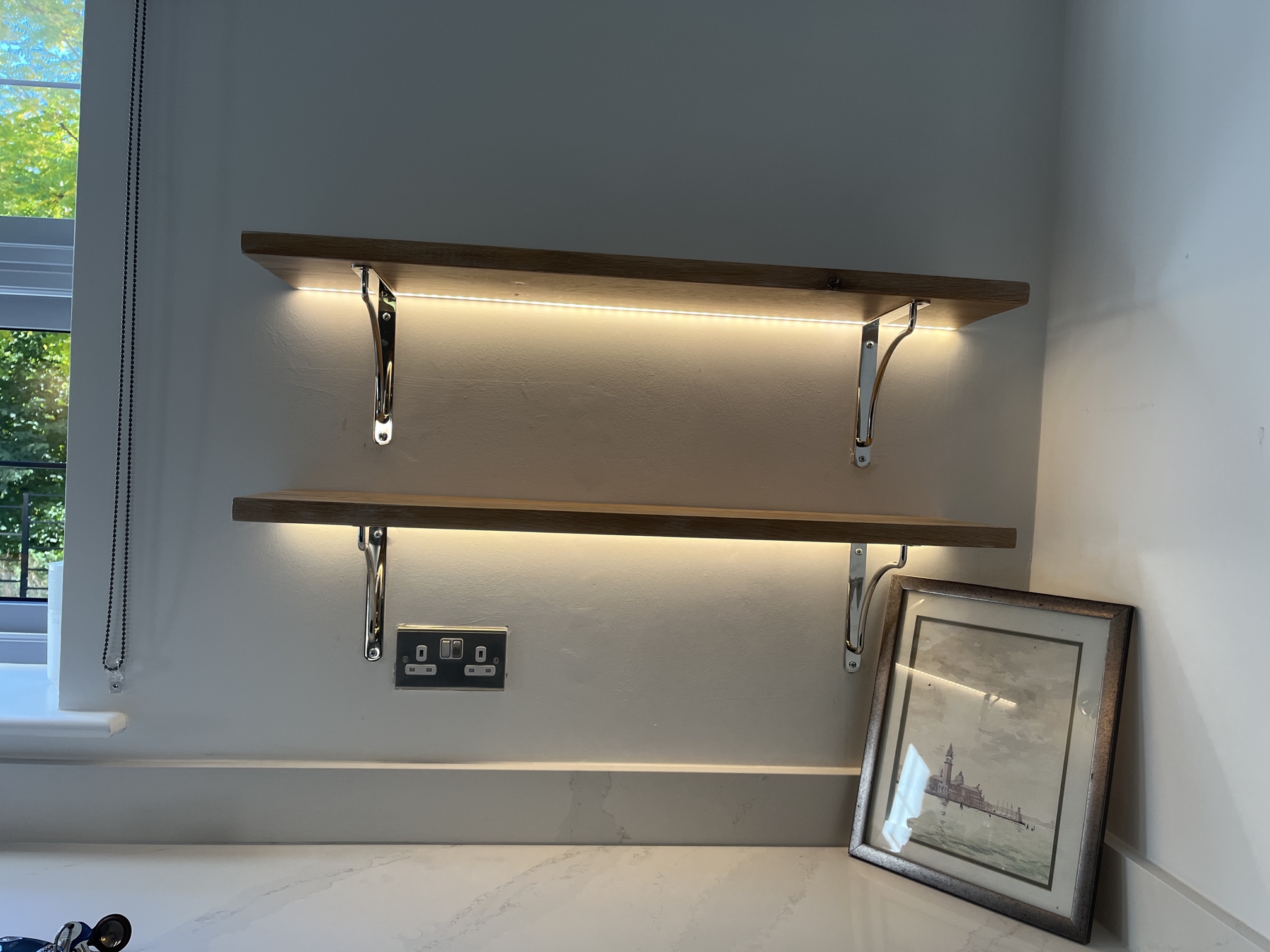
Cabinet lighting Shelf lighting Plinth lighting
Each layer serves a specific purpose and improves the overall experience of the room.
## 4. Leaving Too Little Worktop and Circulation Space ### Why it causes problems
Kitchen plans often prioritise large islands, oversized appliances and decorative features.
Those additions can reduce practical working space.
A kitchen requires clear surfaces for:
Food preparation Serving meals Small appliances Everyday household tasks
Circulation space matters as much as worktop space.
Narrow walkways can create problems when:
Appliance doors are open Multiple people use the kitchen Guests gather around an island Children move through the room What to do instead
Protect preparation zones during the design stage.
Allow sufficient worktop space between:
Sink and hob Hob and adjacent walls Sink and food preparation areas
Maintain comfortable circulation routes around islands and high-traffic areas.
Large kitchens benefit from generous spacing. Smaller kitchens require careful planning to maximise every centimetre.
## 5. Choosing Style Before Function ### Why it causes problems
Social media and design magazines often showcase visually striking kitchens.
Many feature:
Minimal storage Decorative shelving Unusual layouts Trend-led finishes
Some designs photograph well but perform poorly in daily use.
A kitchen should support cooking, cleaning, entertaining and family life.
Design decisions based solely on appearance can create long-term frustration.
What to do instead
Evaluate every design feature through a practical lens.
Ask:
Does this improve functionality? Will this remain useful in ten years? Does this increase maintenance requirements? Does this reduce storage or workspace?
Natural stone worktops, quality cabinetry and premium appliances can combine aesthetics and performance. The strongest kitchens achieve both.
Function should guide design decisions from the start.
## FAQ ### What is the biggest kitchen design mistake?
Poor layout planning is often the most expensive kitchen design mistake. An inefficient layout affects cooking, storage, movement and day-to-day usability.
How much storage should a kitchen have?
A kitchen should accommodate all cookware, food storage, small appliances and pantry items without overcrowding worktops. Storage requirements vary between households, so designers should assess actual possessions before planning cabinetry.
Are kitchen islands always a good idea?
No. A kitchen island needs sufficient clearance around all sides. In smaller kitchens, an island can restrict movement and reduce usable floor space.
What type of lighting works best in a kitchen?
The best kitchens use layered lighting. Task lighting supports food preparation, ambient lighting illuminates the room and feature lighting enhances visual appeal.
###Should kitchen design prioritise appearance or function?
Function should come first. A kitchen that works efficiently every day will remain satisfying long after design trends change.
###Can poor kitchen design reduce property value?
Yes. Buyers often notice inadequate storage, awkward layouts and poor lighting. A well-planned kitchen can improve both usability and market appeal.
##Conclusion
The most expensive kitchen mistakes rarely involve cabinet colours or worktop choices. They stem from planning decisions that affect how the room functions every day.
A successful kitchen combines efficient workflow, sufficient storage, effective lighting, generous workspace and practical design choices.
Before selecting finishes or appliances, focus on how the kitchen will perform. Strong planning at the beginning of a project can prevent years of inconvenience and costly alterations.
By addressing these five common kitchen design mistakes before installation begins, homeowners can create a kitchen that delivers both visual appeal and long-term value.